A year ago, Hot Paper Lantern published research showing that data center operators were losing control of their own stories. Nearly 10% of all social media conversations about the industry were negative, and the companies generating the most coverage were often also generating the most criticism. Our warning was overly simplistic: if you are not actively shaping your narrative, someone else will do it for you, and usually not in your favor.
Twelve months later, the numbers are significantly worse.
Between March 6 and April 6, 2026, there were over 1.4 million mentions of data centers across social and traditional media. Forty-five percent of those mentions were negative. Just 14 percent were positive. That ratio speaks to where public sentiment stands, and it should be a wake-up call for every operator trying to build, expand, or earn approval in a new market.
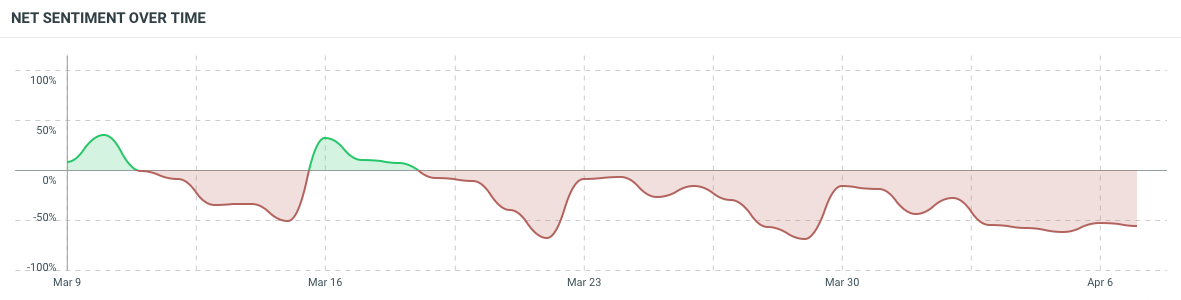
The anger is real, it is organized, and it is showing up in places that directly affect business outcomes across the country.
48 projects worth over $150 billion have been stalled or canceled as local governments delay or block development. Moratoriums are spreading. Investors are starting to question whether companies can deliver on the commitments they have made. And now, the opposition has a documented playbook covering energy costs, water consumption, jobs, and community impact that is being picked up by elected officials across party lines.
This week was a stark reminder of how intense public sentiment around data centers has become. An Indianapolis city councilman who had publicly supported a data center in his district was targeted in a shooting at his home. A note left at the scene read "No Data Centers." Fortunately, he and his young son were not harmed. The community group opposing the project immediately and clearly condemned the act, but the broader picture of a local elected official facing that level of hostility over a rezoning vote speaks volumes about the environment operators are now working in.
That adversarial environment did not appear overnight. It formed in the space that the industry largely left open.
Our research found that the operators outperforming their peers were not the biggest ones. In fact, it’s just the opposite. Based on revenue, the bottom half of companies we studied generated seven times more coverage and fifteen times more engagement than the top tier earners. They were succeeding by being proactive, producing specific and consistent messaging tailored to the audiences that mattered, before the opposition had a chance to define the project for them.
Most operators have not done that work. They have announced jobs numbers and expected the community benefit to be obvious and the community to be oblivious. The core problem is the gap between what the industry believes it contributes and what communities actually understand, and it is widening by the day.
The good news is that the research clearly shows that operators who engage early, build genuine community relationships, and communicate in plain language about what they actually bring to a neighborhood can change this dynamic.
But the window is not unlimited. The opposition is active, it is funded, and it has a head start in too many markets. The question for operators right now is: Who is telling your story?
Explore HPL’s Data Center Narrative Risk Dashboard for a state-by-state view of media sentiment, public pressure, policy activity, and opposition risk across all 50 states.
View Dashboard